
Zero-Turn vs. Lawn Tractor: Which Mower Should You Buy?
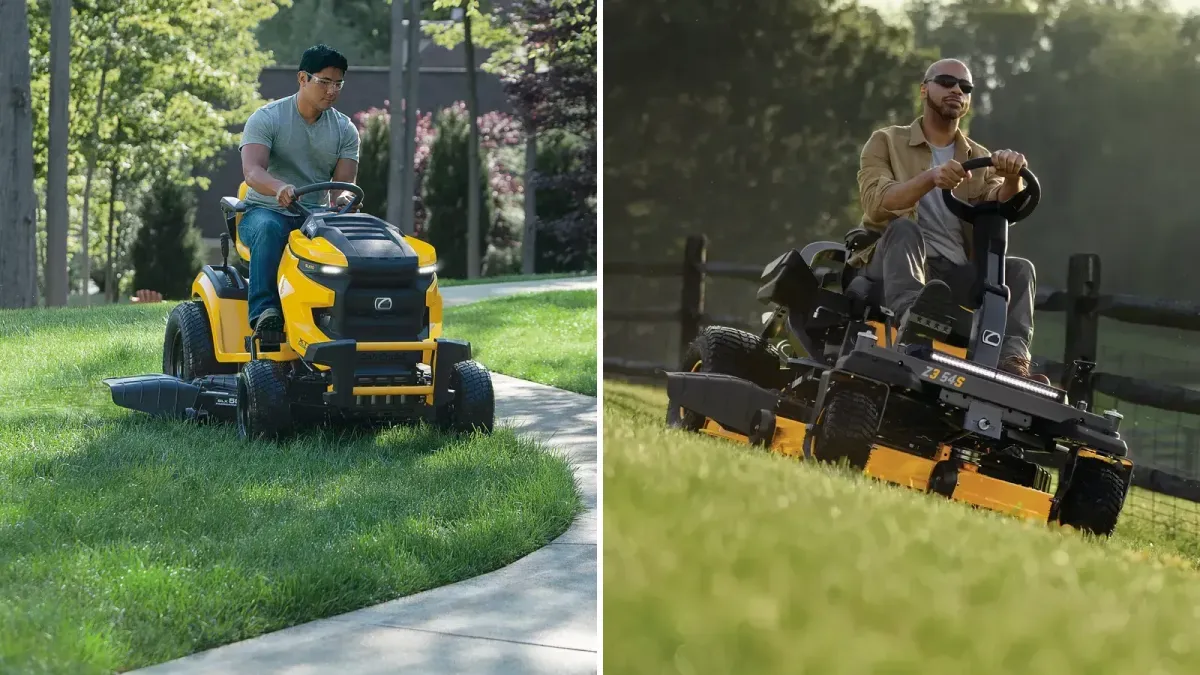
If you're asking this question, you already know you want a riding mower. What you're really deciding is whether to buy a machine built for mowing, or a machine that mows and also pulls a cart or a spreader around. Those are two different purchases.
A quick note on names, because people use them loosely. A zero-turn is a riding mower too. When most people say "riding mower," they mean a lawn tractor: engine in front, steering wheel, deck underneath. A garden tractor is a heavier machine built for ground-engaging attachments, and it's a different conversation.
My answer for most people is a zero-turn. If mowing is the main job, a zero-turn gets it done faster on pretty much every property I see. A lawn tractor makes sense when the machine has to pull something around every week, or when you just don't want a zero-turn. Hills change which zero-turn I'd put you on. They don't automatically change the answer.
Why a zero-turn gets the job done faster
The reason is turning. A lawn tractor spends a lot of its time swinging wide arcs, backing up, and lining up for the next pass. A zero-turn spins around the tree, the bed, or the fence post, and you're back to cutting grass.
That maneuverability means you're almost always cutting. It matters on a small, open lawn too, because you still turn at the end of every pass.
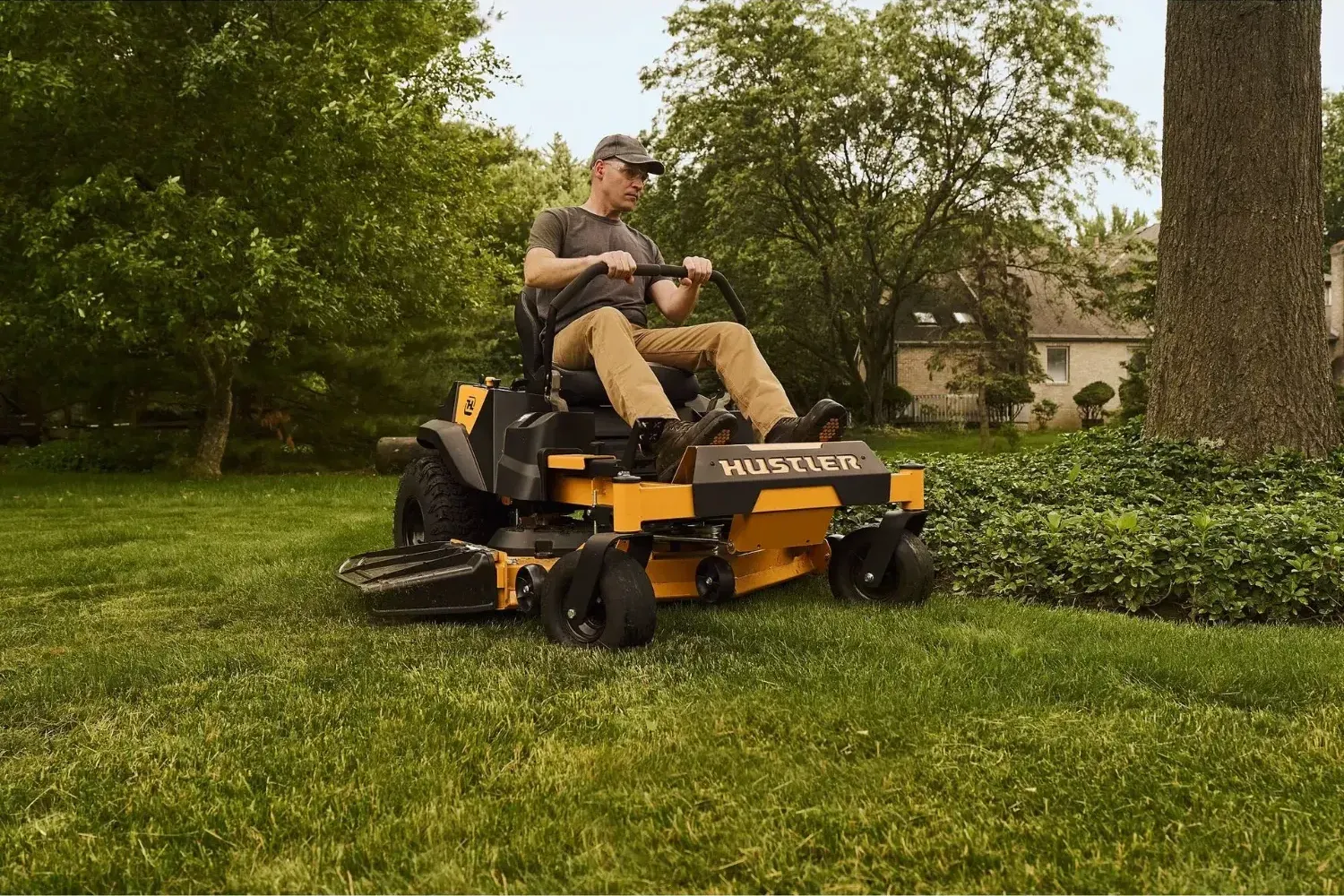
I don't hear from many people who moved from a lawn tractor to the right zero-turn and wished they hadn't. Once somebody has owned one, they're very unlikely to go back to a lawn tractor just for mowing.
A faster machine doesn't automatically cut better, though. Cut quality comes from the deck, the blades, how the deck is set up, your ground speed, and what the grass is doing that day. The label on the machine doesn't decide it.
When a lawn tractor still makes sense
There are a few real reasons I'd put someone on a lawn tractor.
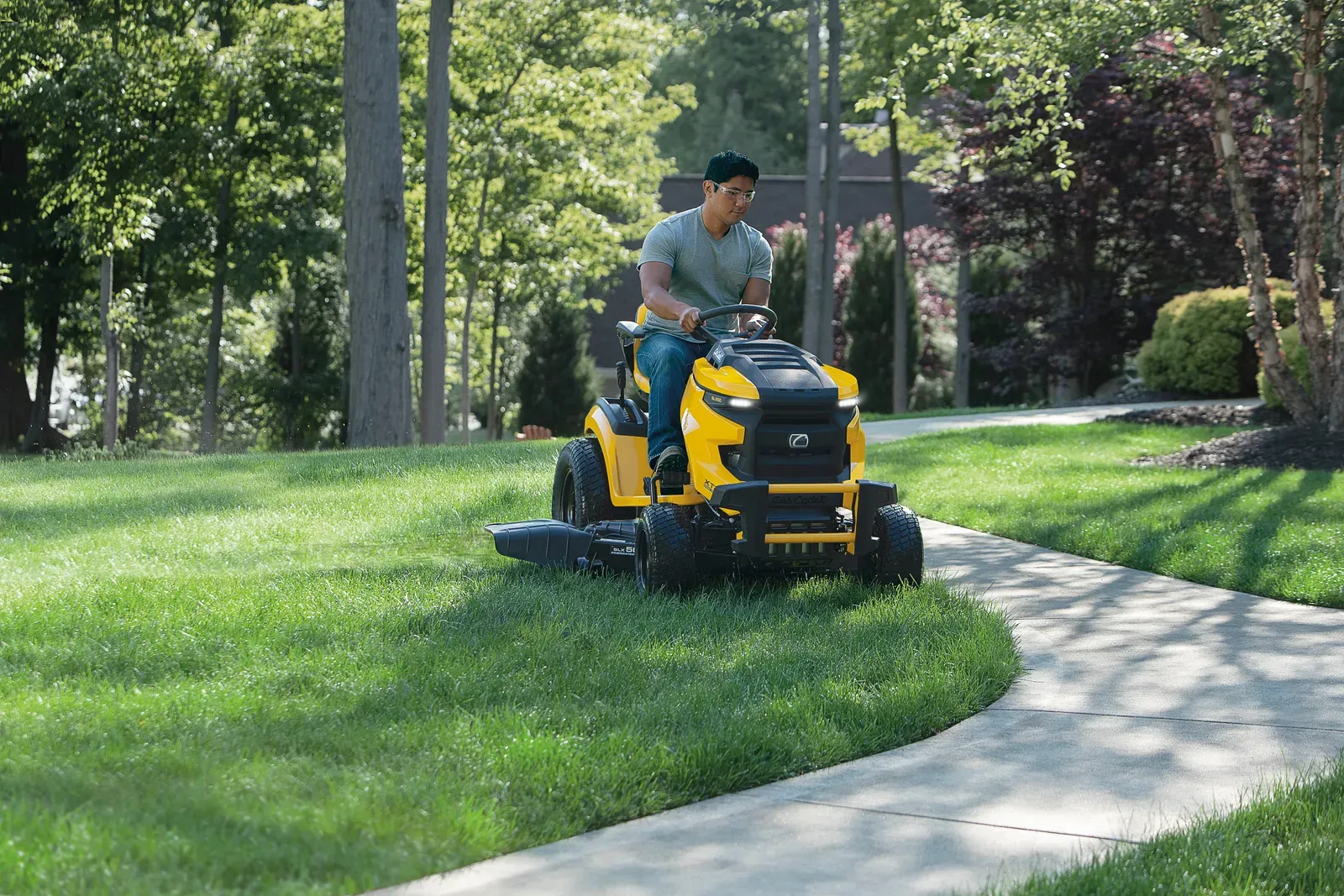
The first is towing. If you pull a cart or a small spreader around a lot, a lawn tractor is easy to drive with something behind it. You've got a foot pedal and a steering wheel, and that's familiar to most people.
The second is a small, simple lawn. If there's not much to mow and not much to mow around, the zero-turn's speed doesn't buy you as much.
The third is that you just don't want a zero-turn. Some people have driven a steering wheel their whole life and have no interest in learning lap bars. That's fair.
But if steering is the only thing holding you back, look at a steering-wheel zero-turn first.
Steering-wheel zero-turns
My household owns a steering-wheel zero-turn, and my wife and I both use it. My mother owns one too. I like the positive steering and the lower, wider feel on the hills around here.
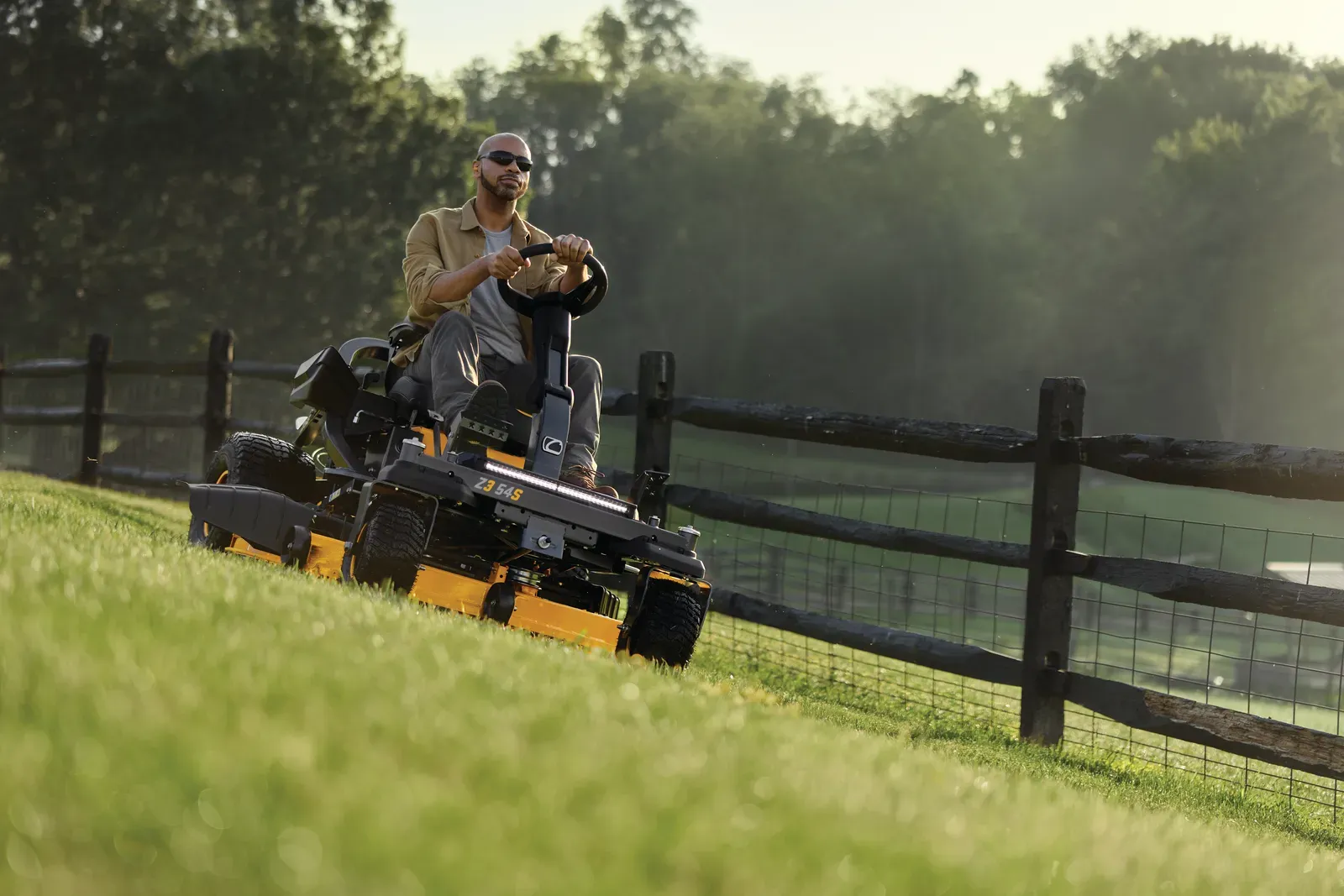
That's my preference, not a safety claim. But if you want zero-turn speed without lap bars, that's the machine I'd look at.
Zero-turn or lawn tractor on hills?
This is the part that surprises people.
On a sidehill, a lap-bar zero-turn can take more correction than you'd expect. The front casters aren't steered, so the machine can wander and you're making constant small adjustments to hold your line. A steering-wheel zero-turn steers its front wheels, so you get positive control of where the front end goes.
A lawn tractor isn't automatically the safer pick on a hill, either. Most sit higher and narrower than a zero-turn. And on a lawn tractor without a differential lock, once one rear wheel starts spinning, you can lose your drive. A zero-turn drives each rear wheel on its own.
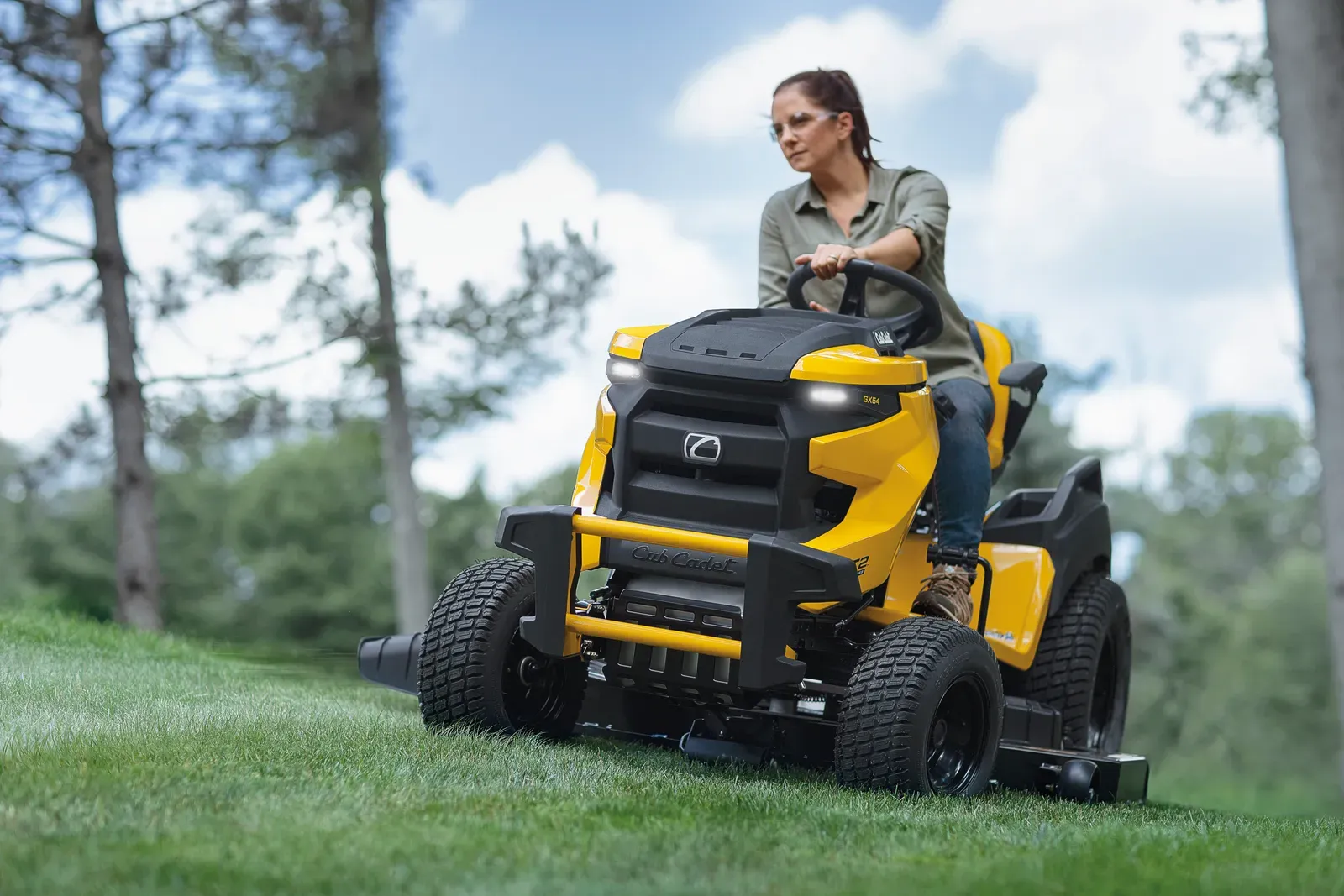
None of that is a guarantee. Wet grass, soft soil, ruts, ditches, and worn tires all change how much traction you actually have. Steep or slick ground can rule out mowing with any riding mower.
Look up the slope rating for the exact model you're buying. If you've got a bank you're not sure about, talk to us about it before you buy, not after. For more on picking a mower for steep ground, see our guide to mowers for steep slopes.
Test the ride at your mowing speed
I had a customer who didn't like the ride on a commercial zero-turn, even with a suspension seat, and ended up preferring a Cub Cadet XT3 garden tractor. I suspect the zero-turn's higher travel speed was part of it. When you're moving faster, every bump in the lawn hits harder.
So compare comfort at the speed you'll actually mow at. A dealer lot is smooth, and your lawn probably isn't. If ride matters to you, ask to try the machine on rougher ground.
If you already have a compact tractor
If a compact tractor already handles your loader work, spraying, carting, and snow, your mower doesn't need to do any of that. In that situation I'd buy a dedicated zero-turn for mowing and let the tractor cover everything else.
Two machines cost more, take more room, and give you another engine to maintain. But if the tractor is already earning its keep, the zero-turn is the clean answer.
A hitch doesn't make it a tractor
This is where people get themselves in trouble. A rear hitch on a mower doesn't mean it's built for ground-engaging work.
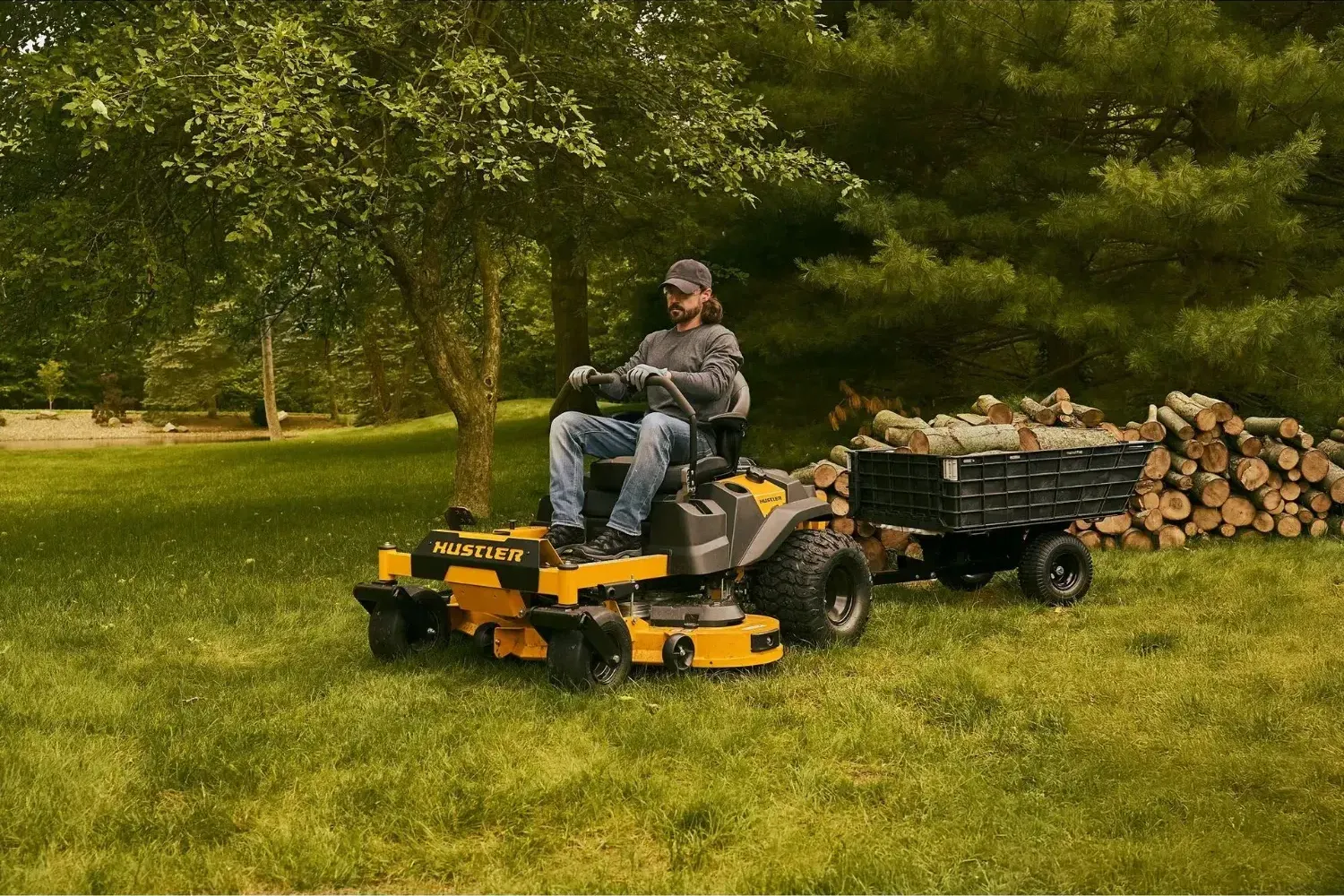
Pulling a cart across flat grass is one thing. Pulling a plow, a box blade, or anything that digs in is a different job, and it points you toward a garden tractor or a compact tractor. Whatever you plan to pull, check the towing and attachment limits for that exact model.
Build matters more than the label
Two zero-turns can be very different machines to own. Some have drives with no scheduled fluid change, and others have drives you can service.
I value having a service path on a mower that's going to work hard, even though that means scheduled maintenance and some cost down the road. A serviceable drive doesn't promise a longer life, but it gives you options when something needs attention.
When you compare machines, ask what deck it has, what drive it has, how easy the service points are to reach, and whether parts are easy to get. Those answers tell you more about ownership than the words "zero-turn" or "lawn tractor."
What about price?
Price matters. But it doesn't decide which mower is right for the job. If you need a Peterbilt and you've got an F-150 budget, I'm not going to tell you to buy the F-150. Figure out the machine that fits the job first, then find the version of it that fits your budget.
A lot of people buy a cheap 42-inch mower at a big box store because it's cheap. It's not an apples-to-apples comparison. Those machines are built lighter, usually with stamped decks and smaller engines, and they're priced that way.
I just traded a customer out of a big box store zero-turn and into a commercial Exmark. The box store mower wasn't cutting it on his property. By the time he traded up, it had cost him a lot more than if he'd bought the right machine to start with.
For a sense of the numbers, Cub Cadet's entry XT1 LT42 lawn tractor is advertised at $2,399, and its Ultima Z1 42 zero-turn at $2,999. We don't stock that tier. At the level we do sell, the XT2 SLX50 lawn tractor is $3,999 and the Ultima Z3 50 zero-turn is $4,899. The bigger price jump is how the machine is built, not whether it's a lawn tractor or a zero-turn.
Before you buy
- Is mowing the whole job, or does the machine need to pull something every week?
- Where is your property steep, wet, or rough?
- Do you already have a tractor for the other work?
- Have you tried it at the speed you'll actually mow?
If you want help sorting it out, start with our mower page, or call or text us at 503-325-2970 and tell us about your property.
FAQ
Is a zero-turn faster than a lawn tractor?
Yes, on almost any lawn. A zero-turn turns in place at the end of each pass and around obstacles, so more of your time goes to cutting grass instead of backing up and lining up.
Is a zero-turn more expensive than a lawn tractor?
A little, when you compare machines built to the same level. How the machine is built moves the price a lot more than whether it's a zero-turn or a lawn tractor.
Can you pull a cart with a zero-turn?
Some models have a rear hitch for a light cart, so check the towing limit for that exact model. If you tow a lot, a lawn tractor is easier to drive with a load behind it. Neither one is built for ground-engaging tools like plows or box blades.
Are zero-turns safe on hills?
It depends on the slope, the ground, and the exact model. Lap-bar zero-turns can wander on sidehills because the front casters aren't steered, and a steering-wheel zero-turn steers its front wheels. Check the model's slope rating, and skip steep or wet banks with any riding mower.
What are the disadvantages of a zero-turn?
It's awkward to drive with something hooked behind it, so it's not the machine for regular towing. Lap-bar models take some learning and can wander on a sidehill. And because you mow faster, rough ground can feel rougher. If none of that applies to your property, those aren't real disadvantages for you.
Is a zero-turn worth it?
If mowing is the main job, yes. You spend more of your time cutting grass and less of it turning, backing up, and lining up. If the machine has to tow something every week, a lawn tractor may be the better fit.
Should I get a garden tractor or a zero-turn?
They do different jobs. If you need to pull ground-engaging tools like a plow or box blade, look at a garden tractor or a compact tractor. If the job is mowing, a zero-turn will get it done faster.
Does a zero-turn cut better than a lawn tractor?
Not automatically. Cut quality comes from the deck, blades, deck setup, and ground speed, not from the type of machine.
Related Reading
Written by Jeremy Linder
I grew up on a working farm with parents who manufactured machinery. I've been selling tractors and implements since 2014, and I run my own 20 acres plus help manage our family's 200-acre beef operation. Everything I recommend is something I'd put on my own property.
Get equipment tips in your inbox
No spam. Unsubscribe anytime.
Check your inbox
We just sent you a confirmation email. Click the link inside and you're in.