
Does working on your own tractor void the warranty?
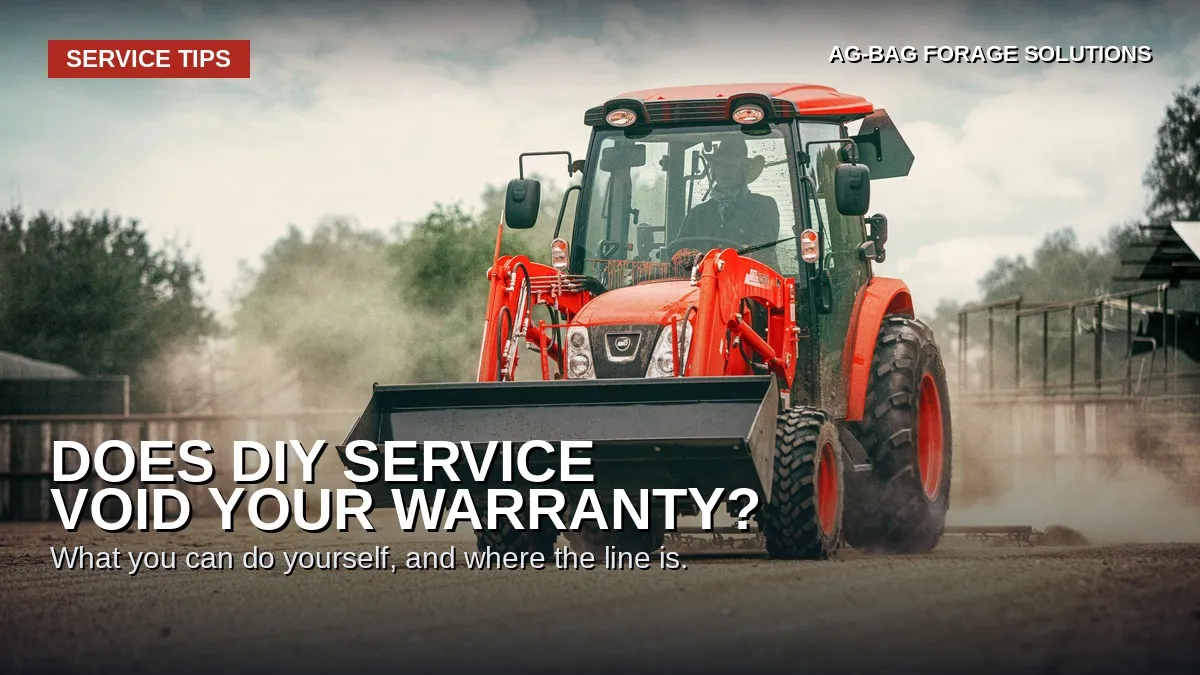
Putting a wrench on your tractor doesn't mean you've canceled the whole warranty. Changing a flat tire, replacing a light bulb, or doing your own service doesn't make every problem from then on yours to pay for.
We have a customer who installed his own auxiliary hydraulics, lights, and several other accessories. He does his own service work, too. When his three-point hitch quit working correctly, we found a problem with the valve inside the rockshaft housing that controls it. We replaced the valve, put everything back together, and the three-point worked right.
The warranty claim was approved. His accessories and service work were never an issue with that claim because the problem had nothing to do with his work.
That's how I want people to think about this. What broke, and did something you did cause it? Not whether you've ever touched the tractor.
If you cause the damage, that repair may be on you
We had a customer do the first service on a three-month-old mower and leave the drain plug loose. The oil leaked out until the engine failed. The customer paid for a new engine.
I'm all for doing your own service. But if you make a mistake, don't expect warranty to necessarily pay for the damage just because the machine is still under warranty.
That doesn't automatically take away the rest of your coverage. An unrelated problem a year later can still be covered, as long as it falls within the warranty's terms. In my experience with LS and KIOTI, claims are very much case by case. I don't speak for the manufacturers, and I can't promise their decision.
Yes, that includes doing the first service
As far as I'm concerned, anybody qualified can do the first 50-hour service. I'm much less concerned about who does it than whether everything on the list actually gets done.
Here's an example from the KIOTI CK2620/3520/4020 operator's manual:
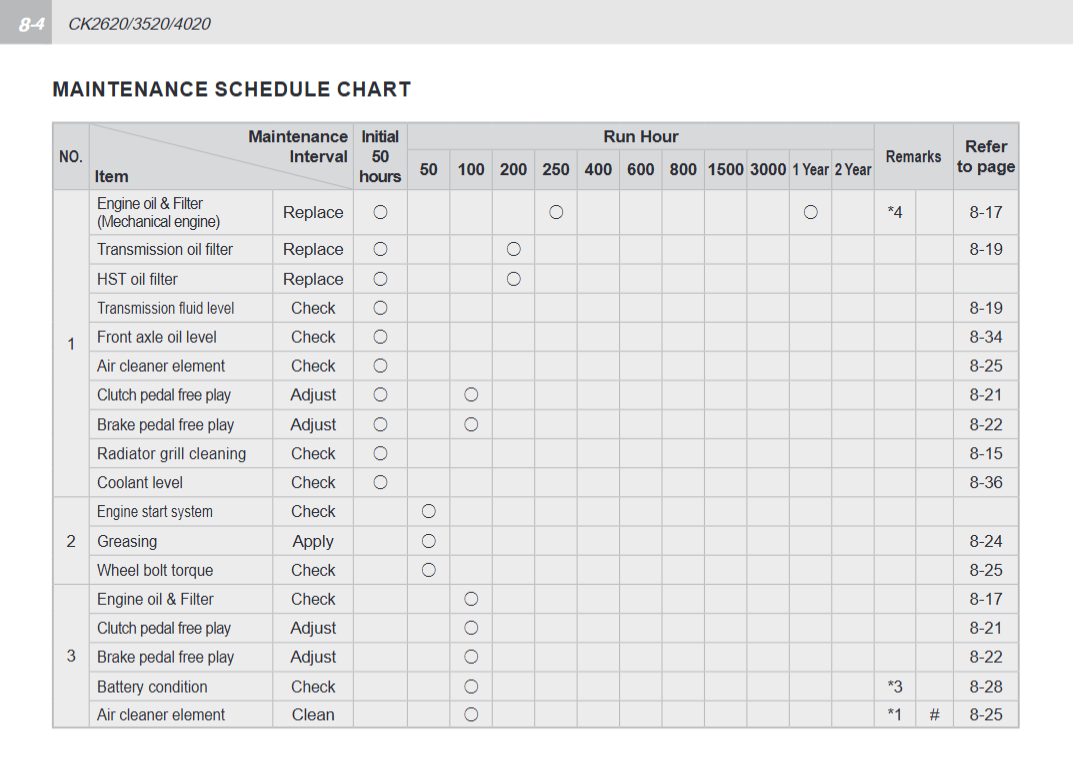
This chart is from page 8-4. It separates the initial 50-hour work from the recurring 50-hour checks. Use the schedule for your own model and transmission. Open the chart at full size if you need a closer look.
There's more here than an engine oil change. There are filters to replace, fluid levels to check, and adjustments and inspections. Starting-system checks, greasing, and wheel-bolt torque are in the recurring 50-hour column. Don't stop reading after the oil and filter line.
Notice what's missing: loader mounting hardware and backhoe mounting hardware. This is the tractor manual. If you've got a loader or backhoe, you need its maintenance instructions too.
Checking that hardware is something people miss. In our experience, even hardware that was torqued when it was new can need attention after those first hours of use. Follow the attachment manual's checks and torque instructions. Catching something loose now is a lot better than finding out about it after it has caused damage.
If you're comfortable doing the work, do it. Know your abilities and your limitations. If you're unsure, have us handle it. Some people can do it perfectly well but just don't want to mess with it, or want the dealer to do that first service for peace of mind. That's fine too.
Use the correct fluids and filters. If you're wondering about buying those somewhere else, I've covered that in Will aftermarket filters void your tractor warranty?
Keep a record, but don't assume every claim becomes an audit
Write down what you did and when. Put it in the manual or keep a separate log. If a question comes up later, you have something to refer to.
Most routine warranty claims in our shop haven't involved a request for maintenance records or fluid samples. When a serious failure raises questions, that's different. With a low-hour engine failure or a suspected fuel-contamination problem, we've had manufacturers ask for oil, fuel, or coolant samples, depending on what failed. In those cases, the samples help them determine what happened. A log doesn't replace actually doing the maintenance.
I can't recall a claim at our dealership being denied simply because someone was slightly overdue for service. Doing a 50-hour service at 52 hours isn't what I'd call neglect. That's my judgment, not a manufacturer's grace period. Follow the hours and calendar intervals in your manual, even if you don't use the tractor much.
Can we just give you the part under warranty?
We get this one often. A check-engine light comes on, the dash shows a fault code pointing to a sensor, and the owner asks if we can just hand them a sensor.
The trouble is, the sensor might not be the problem. It could be a broken wire in the harness. You could replace the sensor and still have the same fault.
The warranty repairs we handle require us to diagnose the problem, do the repair, and verify that it's fixed. Warranty doesn't pay us to keep replacing parts that weren't the problem, either.
I know that's a pain sometimes. Sometimes the fix really is simple and the owner could easily do it. But doing your own maintenance and asking the manufacturer to pay for a repair are different situations.
If you want to buy a part and fix it yourself, that's your choice. Don't assume you'll be reimbursed afterward. If you want the repair handled under warranty, call the dealer first and let them handle the diagnosis, repair, and claim.
What about an accessory you added?
An accessory may have its own parts warranty. That doesn't mean it gets the same coverage as the tractor, or that it pays for your installation labor. Check the terms for the particular kit or part.
There are separate questions here: did the accessory itself fail, did the installation cause damage, or did something unrelated fail on the tractor? Our customer's three-point valve was that last situation.
If something goes wrong after you've worked on your tractor, tell us what you did and what it's doing now. Don't decide there's no point asking about warranty just because you've put a wrench on it.
Related Reading

Written by Jeremy Linder
I grew up on a working farm with parents who manufactured machinery. I've been selling tractors and implements since 2014, and I run my own 20 acres plus help manage our family's 200-acre beef operation. Everything I recommend is something I'd put on my own property.
Get equipment tips in your inbox
No spam. Unsubscribe anytime.
Check your inbox
We just sent you a confirmation email. Click the link inside and you're in.