
Why Rotational Grazing Cuts Hay Costs Better Than Making Your Own
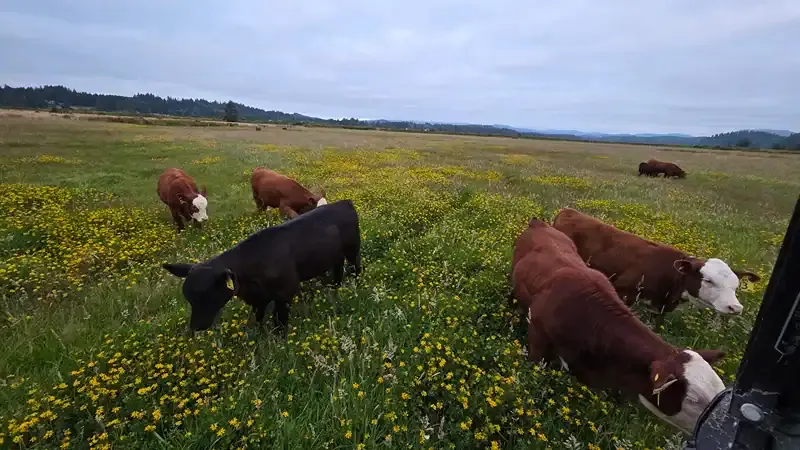
I recently wrote about why most people shouldn’t buy hay-making equipment. But that raises the obvious question: if you’re not making your own hay, how do you cut those feed bills?
Rotational grazing has been my answer. It cut my hay feeding from 7 months down to under 5 months—better results than any disc mower could deliver. While customers debate spending $30,000 on hay equipment, rotational grazing costs a fraction and often saves more money.
I’m kind of a grazing dork, so I offer suggestions based on what I’ve learned. Some customers implement it, most don’t. But the ones who do always tell me the same thing: they wish they’d started sooner.
Continuous Grazing vs. Rotational Grazing: Why It Costs More
The biggest mistake I see isn’t buying the wrong equipment—it’s using continuous grazing, or what some people call set stocking. It’s usually the result of stocking rates that are too high, and it creates a vicious cycle that costs money every single day.
Here’s what happens with continuous grazing: you turn livestock out in spring and leave them there all season. Your animals eat the best grass first, then graze those same plants again before they can recover. Meanwhile, less palatable plants—often weeds—get stronger every season. Over time, your pasture utilisation drops, grass regrowth slows, and your land produces less feed per acre.
That means you start buying hay earlier in the year and feed it longer. Remember those $15-35 small square bales I mentioned? Continuous grazing means you’re buying more of them, for more months, every year. It’s a downward spiral: overgrazing leads to reduced productivity, which causes more hay feeding and more overgrazing.
Most livestock producers I talk to have the same response when I mention rotational grazing: “That won’t work on my place.” I don’t know why that’s such a typical thing in farming, but it’s probably the most expensive mindset you can have. Every extra day you graze instead of feeding hay saves the cost of a day’s worth of stored feed for your entire herd.
(The USDA NRCS prescribes specific standards for rotational grazing that show these economic benefits.)
How to Set Up a Rotational Grazing System
The good news is you don’t need much to get started—just water infrastructure and electric fencing, either temporary or permanent. A high-quality fence energizer setup properly with proper grounds is essential, and it’s not cheap, but it’s still a fraction of what hay-making equipment costs.
Once your cattle are used to being moved, the rotational grazing system becomes incredibly simple. I can move everyone in 5 minutes. It takes longer to move their mineral feeder than it does to shift the whole herd to a fresh paddock.
Here’s where some equipment does earn its keep: you’ll occasionally need a rotary cutter for grazing management. In any managed grazing system, livestock rarely graze plants evenly. If you don’t mow behind them, some areas get over-mature and lose quality for the next rotation. A quick pass with a rotary cutter encourages grass regrowth and improves overall pasture utilisation—but you’re talking about a $3,000 implement, not $30,000 in hay-making gear.
The reality is most rotational grazing systems need:
- Temporary or permanent electric fencing for smaller paddocks
- Reliable water in multiple paddocks
- A quality fence energizer with proper grounding
- Occasionally, a compact tractor with a rotary cutter for pasture maintenance
Compare that to the disc mower, tedder, rake, and baler setup, and you’re looking at maybe one-tenth the equipment investment. You’re creating smaller paddocks instead of buying bigger machinery.
(Gallagher has some great free resources for fence installation and grazing management)
Real-World Results from My Grazing Plan
I’ve been down this road myself. I started with a few polywire subdivisions, then slowly began adding water in more areas so I had more flexibility with paddocks. Like most livestock producers, I initially managed my grazing strategy around existing water sources.
Adding 2,500 feet of water line gave me the most flexibility for paddock rotation. Now I’ve got some single-wire high tensile electric fencing and still use polywire in a few spots. Since shifting to a managed grazing system and aiming for 24-45 days of rest depending on the season, my pastures get better every year.
The results speak for themselves: I went from feeding hay for seven months down to just under five. That’s two months less hay feeding every year—a huge reduction in my aual feed costs. Seasonal flooding every November still limits some grazing land, but overall the forage production and pasture growth gains have been worth every bit of the effort.
Here’s the time reality: I move cattle twice per week during the grazing season. Each move takes about 10 minutes once they’re trained to the rotational grazing plan. I’d much rather spend that little bit of time moving them to fresh pasture than feed hay for an extra two months every year.
Pasture Growth, Soil Health, and Sustainability Benefits
What really convinced me about rotational grazing wasn’t just the hay savings—it was watching my pastures improve year after year. When you give grass adequate rest between grazings, several things happen that save money long-term.
First, grass regrowth is stronger when plants have time to recover. Better root systems mean more drought tolerance and higher forage production per acre. Second, livestock spread their manure more evenly across paddocks instead of concentrating it in a few favorite spots. That improves soil fertility naturally.
The soil health benefits are real, too. Controlled grazing reduces soil erosion compared to continuous grazing, and the improved plant growth actually helps with carbon sequestration. Some people call this regenerative agriculture, but I just call it good farming practices that happen to save money.
Mob grazing—where you use very high stocking density for very short periods—takes this even further, but that’s more intensive than most small operations need. The key is giving your grass time to recover while making the most of what you’ve got.
Limitations and When Rotational Grazing Isn’t Worth It
I’ll be honest about the limitations. If you have one horse on 2 acres, rotational grazing probably isn’t worth the effort. Scale matters, and you need enough land area to make meaningful paddocks.
It does take time during the summer versus just putting cattle out and not looking at them for three months. Some people prefer the set-and-forget approach, and I understand that. But for me, the math is clear: a few minutes twice a week beats two extra months of hay costs.
There’s also the stocking rate reality. Grazing management can work wonders, but there’s one thing no grazing practice can overcome—overstocking. If your acres can only produce enough forage to feed 10 head of cattle for eight months, putting 15 out there will shorten your grazing period, degrade your pasture, and force you to feed more hay. No rotational grazing system, grazing strategy, or expensive equipment will fix that.
The fix is matching livestock numbers to what your forage production can realistically support—or finding more land for grazing.
Getting Started with a Simple Grazing Plan
You don’t need to install a complex rotational grazing system overnight. Start with what you’ve got: split your pasture in half, move animals between paddocks, and watch how grass responds. Add portable water systems to open up new grazing areas. Test your grazing method with temporary fencing before committing to permanent infrastructure.
The goal isn’t just prettier grass—it’s extending the grazing season and cutting stored hay feeding. With better forage growth and balanced paddock use, most livestock operations can extend their grazing period by 4-6 weeks in the first year alone.
Start with a basic grazing plan: divide existing pastures into smaller paddocks, move livestock every few days, and give each area at least 3-4 weeks rest. You can refine the system as you learn what works on your specific acres.
Like I said about hay equipment—focus on management before buying gear. Every extra grazing day is money saved on hay for your entire operation. That adds up faster than you might think, and it keeps working year after year without depreciation, fuel costs, or repair bills.
This approach might not sell any equipment, but it’ll save you money. And when you do need gear—whether it’s for handling hay, maintaining pastures, or the infrastructure to make rotational grazing work—we’ll help you get it right the first time.
Frequently Asked Questions
What is rotational grazing?
Rotational grazing is a farming practice where livestock are moved regularly between different paddocks, allowing grass time to recover before being grazed again. It’s the opposite of continuous grazing where animals stay in one area all season.
What equipment do I need for rotational grazing?
The basics are electric fencing (temporary or permanent), a quality fence energizer with proper grounding, and water access in multiple paddocks. Occasionally you’ll need a rotary cutter for pasture maintenance, but the equipment costs are minimal compared to hay-making gear.
How long should a paddock rest between grazings?
I aim for 24-45 days of rest depending on the season and grass growth. In spring when growth is fast, you might get away with less. In summer or drought conditions, grass needs longer to recover.
Does rotational grazing work for cattle, sheep, and other livestock?
Yes, the principles work for most grazing animals. Cattle, sheep, goats, and horses all benefit from managed grazing, though you’ll need to adjust paddock sizes and move frequencies based on the species and stocking rates.
How does rotational grazing reduce hay costs?
By improving grass regrowth and pasture productivity, rotational grazing extends your grazing season. Every extra day animals graze instead of eating stored hay saves money. I cut my hay feeding from 7 months to under 5 months using this system.
Can rotational grazing improve soil health?
Absolutely. Giving grass time to recover builds stronger root systems, livestock spread manure more evenly, and controlled grazing reduces soil erosion compared to continuous grazing. It’s sustainable farming that actually saves money.
What’s the difference between rotational grazing and mob grazing?
Mob grazing uses very high stocking density for very short periods (often daily moves), while rotational grazing typically moves livestock every few days to a week. Both give grass recovery time, but mob grazing is more labor intensive.
Can rotational grazing work on small farms?
It depends on scale. If you have adequate acres to create meaningful paddocks and multiple livestock, yes. But if you’re talking about one horse on 2 acres, the labor probably isn’t worth the benefits you’d see.
Written by Jeremy Linder
I grew up on a working farm with parents who manufactured machinery. I've been selling tractors and implements since 2014, and I run my own 20 acres plus help manage our family's 200-acre beef operation. Everything I recommend is something I'd put on my own property.
Get equipment tips in your inbox
No spam. Unsubscribe anytime.
You're in!
Thanks for subscribing. Talk soon.