
How Much Does a Bale of Hay Cost? Why Most Small Farms Shouldn’t Make Their Own
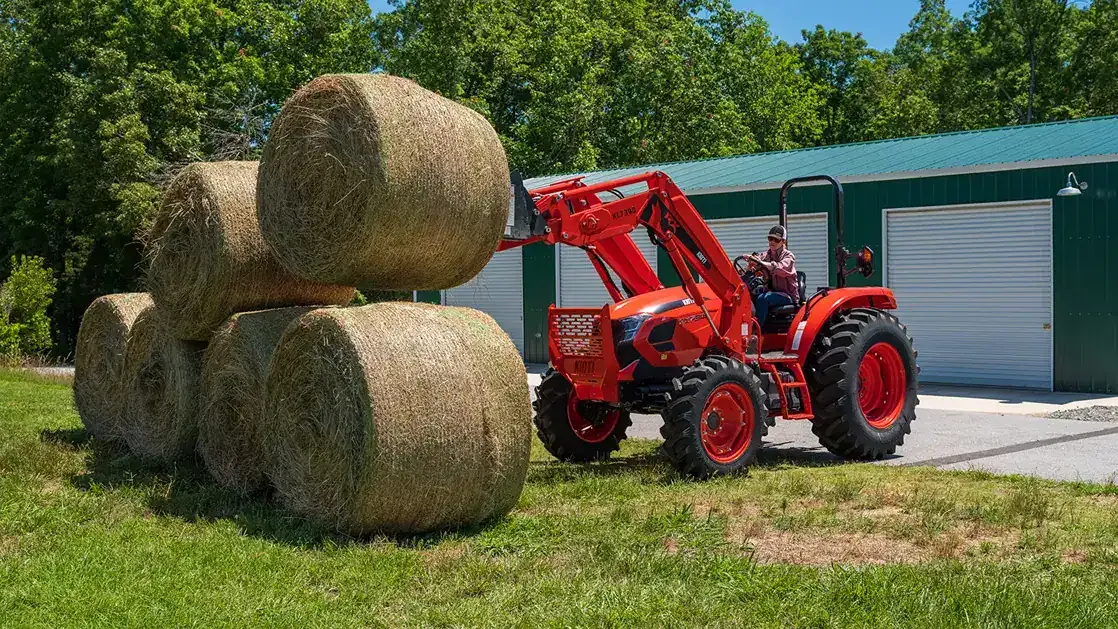
I sell equipment for a living. If you need a disc mower, tedder, or rake, I can order it tomorrow. But after working with small-acreage owners for more than 20 years, I’ll tell you straight—most folks are better off skipping the hay-making gear entirely.
The question “How much does a bale of hay cost?” usually sends people down the wrong path. The real question isn’t how to make hay cheaper—it’s how to need less of it.
Now, don’t get me wrong—when it does make sense to buy equipment, I’m happy to sell you the right machine for the job. That might be a compact tractor with a loader for moving bales, a bale spear for big rounds, or Poettinger forage gear like a disc mower, tedder, or rake. The goal is to match the tool to your acreage and needs, not sell you something that’ll collect dust.
Let’s break it down.
How Much Does a Bale of Hay Cost in the Pacific Northwest?
Hay Source | Small Square Bales | Round Bales | Notes |
|---|---|---|---|
Feed Store | $15-35 | $50-80 | Premium pricing; convenient but expensive for volume feeding |
Farm Direct | $7-12 | $40-70 | Better price; you haul and deal with seasonal availability |
Field Prices | Similar to farm direct | Similar to farm direct | Minimal savings; pick up on farmer's schedule |
(For reference, USDA posts current hay market reports showing prices for alfalfa hay, grass hay, and mixed hay in the Pacific Northwest.)
Looking at those numbers, making your own hay can seem like a no-brainer—until you do the math.
The Question Everyone Gets Wrong
Most people look at hay cost strictly in terms of the bale price. That’s only half the equation.
Your feeding cost = price per bale × number of days you feed it.
You can lower either number, but lowering the days you feed often saves far more than shaving a few dollars off the bale price.
That’s why “How do I feed less hay?” is usually a better question than “How do I make hay cheaper?”
The Real Cost of Making Your Own Hay
I’ve watched plenty of customers spend $25,000–$40,000 on hay-making equipment for a crop they harvest maybe three weeks a year. On paper, it looks like independence. In reality, it’s often a slower, more expensive way to get the same feed your neighbor will sell you for less.
Custom Hay Work
Hiring a custom operator to cut, ted, rake, and bale typically costs $4–5 per small square bale or about $30 per large round bale. Add around $150/hour if you want them to haul and stack.
The bigger issue isn’t the custom rates—it’s timing. In the Pacific Northwest, weather windows for quality hay are short. When your hay contractor finally gets to you after a week of rain, your hay crop quality suffers, sometimes enough to make it barely worth baling.
Owning Your Own Equipment
Here’s the equipment reality nobody talks about when they’re dreaming about making hay:
To run a disc mower—whether it’s a 4-disc or 5-disc—you’ll need at least a 50-horsepower tractor. A small tedder or rake can get by with something a bit smaller, but for moving large round bales safely, you really want 40+ HP. People do it with less, but you’re exceeding the limits of the tractor regularly—shortening its life and putting a lot of strain on the front axle.
The equipment list for making hay adds up fast:
Equipment | Used Cost | Notes |
|---|---|---|
Disc Mower | $8,000+ | Requires 50+ HP tractor minimum |
Tedder | $6,000 | 40+ HP tractor recommended |
Rake | $4,000 | Essential for efficient hay gathering |
Baler | $15,000+ | Optional if using custom baler service |
Total | $30,000-$40,000+ | Used only 3 weeks/year = 8-12 years to break even |
That's $30,000–$40,000 in gear for something you'll use maybe three weeks a year. I've sold Poettinger mowers, tedders, and rakes to people who could justify them, but I've also told plenty of folks it wasn't the right move. When I ask, "How many years of buying hay does this represent?", the answer is usually 8–12 years—assuming nothing breaks.
What You Probably Do Need
Even if you never make a bale in your life, you’ll still need to handle and feed it. That’s where a tractor earns its keep year-round.
For most small farms, the essentials are:
Equipment | Use | Benefit |
|---|---|---|
Compact tractor (40 HP+) with loader | Year-round | Moves bales, handles daily chores, multi-purpose workhorse |
Bale spear | Hay season + property work | Safely moves large round bales; quick attachment swaps |
Forks or grapple | Hay stacking | Efficient handling of small square bales |
Small trailer or wagon | Hay transport + general use | Moves hay around property; supports other farm work |
These tools aren't just for hay season—they help with chores every month of the year, which means you're getting value for your investment daily, not just during a short harvest window.
(For practical tips, OSU Extension’s pastures and forages guide is a good resource for small-acreage livestock owners.)
The Smarter Play: Feed Less Hay
Every customer I’ve seen make big gains in their hay bill has one thing in common—they manage their grazing, not just their pasture.
Better fencing for rotational grazing is the foundation. When livestock are moved through paddocks instead of having free run of a field, the grass has time to recover and regrow. Pair that with reliable water in every paddock and you can harvest more of your own forage with hooves instead of machinery.
Yes, reseeding with productive forage mixes—often including clover—helps, but it’s the controlled grazing that unlocks those gains. I’ve seen horse owners, beef cattle operations, and mixed-livestock farms cut their hay feeding from six plus months to less than four months just by managing when and where their animals graze. That’s a 50% reduction in your hay bill without ever hooking up a disc mower.
If you want the specifics on how rotational grazing actually works—including what equipment you need and how I cut my own hay feeding by two months—I wrote a detailed guide on why rotational grazing cuts hay costs better than making your own.
Instead of tying up $30,000+ in equipment that sits idle 49 weeks a year, you’re investing in infrastructure and systems that work every day. You’re producing feed with sunlight and rain, not diesel and repairs.
When Making Your Own Hay Does Make Sense
I’m not anti-hay-making. There are situations where it works:
50+ acres of productive pastures with good hay supply
Multiple cuttings a year possible in your climate
The right equipment already on hand
Reliable labor and storage space
Or access to extremely cheap, timely custom work
In those cases, you can spread the costs over enough bales to make it pencil out. But that’s not most small-acreage owners I talk to.
The Bottom Line: Hay Cost vs. Feeding Cost
Feed store hay is expensive, but making your own is usually worse once you factor in depreciation, repairs, storage, and opportunity cost.
The real question isn’t just how much does a bale of hay cost—it’s how can I reduce the total number of days I need to feed stored hay?
For most small farms, the answer is simple: buy quality hay from a reliable farmer and invest your time and money in extending your grazing season.
This advice might cost me some hay equipment sales, but it’s the truth. When you do need equipment—whether it’s for moving hay, improving pastures, or in the rare case where making hay actually makes sense—I’ll help you get it right the first time.
Written by Jeremy Linder
I grew up on a working farm with parents who manufactured machinery. I've been selling tractors and implements since 2014, and I run my own 20 acres plus help manage our family's 200-acre beef operation. Everything I recommend is something I'd put on my own property.
Get equipment tips in your inbox
No spam. Unsubscribe anytime.
You're in!
Thanks for subscribing. Talk soon.